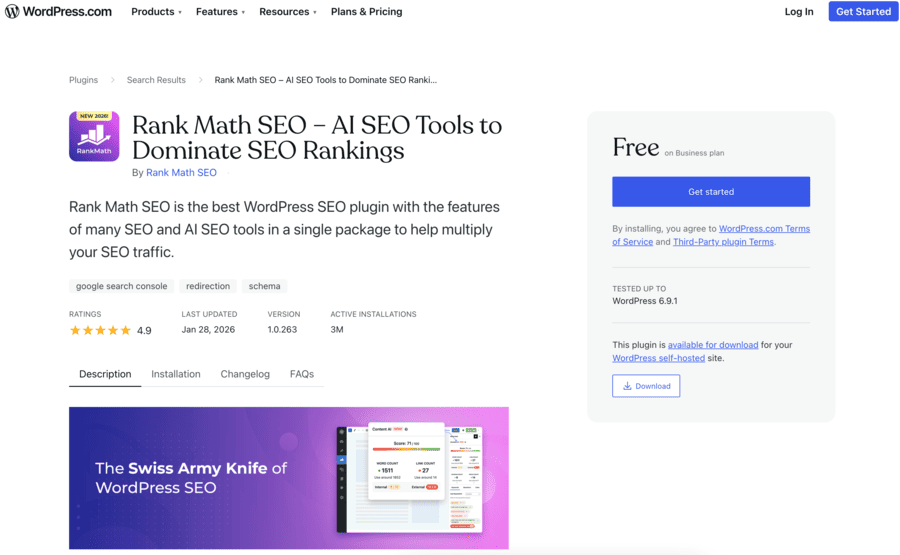
If you search for almost any WordPress plugin today — whether it’s an SEO tool, a form builder, or a membership plugin — chances are Google will take you straight to a WordPress.com page.
At first glance, this feels normal. WordPress is WordPress, right?
Not anymore.
Many users don’t realize that WordPress.com and WordPress.org are two very different ecosystems. And WordPress.com has quietly reshaped how plugins are discovered, installed, and monetized.
The New Plugin Trap
Here’s what typically happens:
- A beginner searches for a plugin like “best gallery plugin for WordPress.”
- They click the top result — often a WordPress.com listing.
- The plugin appears free.
- They attempt to install it…
- And then they hit a wall:
“Plugins are only available on the Business plan.”
So even though the plugin itself might be completely free, WordPress.com requires the user to upgrade to a paid Business plan just to access it.
Paying Twice: The Hidden Surprise
This is where things get worse.
Many plugins follow a freemium model:
- Free core version
- Paid premium upgrades
So a new user may:
- Pay for WordPress.com Business (just to install plugins)
- Then pay again for the premium version of the plugin
What feels like a simple “free plugin install” turns into a layered subscription stack.
For newcomers, it’s confusing and frustrating.
WordPress.com Has Reframed Plugins as Their Own Property
The biggest shift isn’t pricing — it’s perception.
WordPress.com has positioned itself as the default WordPress experience.
Plugins that were historically part of the open WordPress.org ecosystem now appear, to an average user, as if they belong to WordPress.com.
In other words:
- Plugins look like WordPress.com features
- Installation feels like a WordPress.com entitlement
- The independent developer ecosystem becomes invisible
This is a subtle but powerful change.
Most Users Don’t Even Know WordPress.org Exists
The average beginner doesn’t understand the distinction:
- WordPress.org → open-source WordPress, full plugin freedom
- WordPress.com → hosted platform with gated plugin access
A user simply searching the web is unlikely to notice.
They just think:
“This is WordPress. Why can’t I install a plugin unless I pay?”
A Quiet Monopoly Over Discovery
By dominating search results and presenting plugin pages as official WordPress destinations, WordPress.com has effectively inserted itself between:
- Users and plugins
- Developers and customers
- Open source and commercialization
The plugin ecosystem hasn’t changed — the gateway has.
Final Thought
WordPress plugins were once the symbol of WordPress freedom:
install anything, customize everything, own your site.
But today, WordPress.com has quietly changed the rules.
Plugins now feel less like community-built tools…
…and more like platform-controlled assets.
The game is no longer just about plugins.
It’s about who controls access to WordPress itself.